Partners

Uncategorized

I am first and foremost a gardener. But who among us couldn’t use a little help now and then? I don’t mean the two-legged kind that can be reluctant or not share your enthusiasm. No, I mean animals. There are many permaculture models that have cows on pasture, followed by sheep, followed by chickens. I am not interested in raising animals for meat. I am a meat-eater and have come to terms with what is means to nourish myself with the flesh of other living things. I have killed a chicken to eat and it has taught me what a gift it is and never to waste any part of it. Still, I don’t have the desire to raise and kill my own animals. I have made connections in the community with those who enjoy the raising of animals and all that entails and I am happy to support them with my purchasing dollars. My animal partners help me with gardening and don’t need to give up their lives to do so.

I have an 8,000 square foot vegetable garden, two hundred-foot flower borders, herb gardens, fruit orchards, and a food forest. This seems like a lot and it has evolved over 20 years but it is not a pasture farm with large animals described above. In fact, you could probably squeeze all this to an acre or two of land. So who are my animal helpers and what do they do for me? I keep chickens and bees and my garden flourishes as a result.

Incorporating animals is following nature’s example. It is ridiculous to think the basic rules are not in play in our own gardens just because we have taken on the role of orchestrator on our given plot. The first and most important rule of gardening with nature is to do no harm. No chemicals of any kind. No artificial fertilizer, pesticides, or herbicides. None. If this is not how you are used to garden you may be afraid to let go. Trust me, the partners who come to help will more than make up for what may be lost by the occasional nibbling insect or invading weed. Clean healthy soil will encourage worms that aerate the soil and nourish it with their droppings. Putting up a few bird houses will encourage them to stick around for lunch and eat unwanted insects. I once had been dismayed by squash beetles that had descended on tender transplants I had recently put out. They were covered and I feared were a total loss. Rather than have an empty patch I added a pretty trellis my sons had made for me. I went in and attempted to soothe myself with a cup of tea on the deck which overlooks the garden. While sitting there I saw a bird land on the perch, look down and seem to be delighted at the feast below. He dropped to the bed and gobbled up all the beetles. I had a bumper crop of squash after all! Now I always add perches for these helpers. I could also wax poetic on the value of the microorganisms and fungi in the soil and how they feed the plants. But the truth is, follow rule number one and you can reap the rewards of the soil microcosm without needing to know the details.

Now the the animals I “hire,” these animal partners and I work together for mutual success. First the chickens. I keep layers. So the first, obvious gift I receive is eggs. But too many folks overlook how helpful chickens in the garden can be. We (read: my dear husband) used to muck out the chicken coop regularly and compost this for a year or so until it was ready to add to the garden beds. We have found easier, faster ways to have the chickens help build our soil. If you haven’t yet heard of a “chicken tractor” look it up and find one that works for you. Basically, this is a moveable coop that is either bottomless or has a mesh bottom (use 1″ mesh) so manure falls through. No more mucking out the chicken coop!! Simply move the coop around your garden. The chickens will scratch to their hearts content eating insects and weed seeds and dropping their fertilizer and scratching it in to the soil. Often times not much else is necessary to prepare the bed. Simply rake it smooth, add an inch or so of compost mulch then your bed is ready to plant or seed. This is best done in the early spring and late fall, before or after planting. During the summer, I rotate the “girls” on my orchards, food forest, and lawns. In winter, I add a foot thick bed of wood chips to my greenhouse (plastic high-tunnel). I roll in their nest boxes and put in a few perches. They scratch and poop all winter into this mulch creating a lovely compost to add to my beds the next season. You only need 3 square feet per bird. I also throw all my kitchen scraps to them over the winter. Chickens are wonderful alchemists turning garbage to garden gold!

Not to be outdone, my other partners, the bees also serve me in two ways. They give me honey of course and pollinate my fruits, vegetables and flowers. In return I give them houses (hives) and protection from bears. The keeping of bees does take a bit of courage but once you have made friends it is a thrilling undertaking. Most of you know that bee populations have been declining over the past few decades. This has the potential to be devastating to worldwide food production which relies on these and other insects for pollination. Keeping your own can help restore the wild populations as well as pollinate not only your plants but those in the wild that birds and others wildlife need for survival. I plant many of their favorites in the garden like sweet alyssum, poppies, and herbs like lovage and parsley that I let go to seed. They return the favor with beautiful flowers and bountiful harvests. Then their golden honey keeps me sweet all winter!

Leap of Faith

Uncategorized

What a leap of faith it is to start seeds in February. To wake up early on a February morning to feed the woodstove and note not that it’s 5F outside but that the sun is up even earlier today, is belief in tomorrow. To think that this bitter cold, snow covered morning is the day to start seeds may seem madness to some; the true believers know that spring really is just around the corner. 

So, I prepare. I have a tall stainless steel shop shelving unit that I picked up at an auction years ago. It works well for seeds because the shelves are adjustable. I have most set about a foot apart which gives me enough room for the seed trays and to hang the shop lights above on a chain two inches above the plants. The shelves are not solid and are water resistant so water drips down to the level below. I use an old plastic toboggan as a water and soil catching tray on the floor under the bottom shelf. Each shelf is the width of a seed tray placed the short way. I set up two four-foot shop lights with reflectors side-by-side per shelf for two shelves. I have one shelf with no lights but with a bottom heat source. I use a rubber, heated floor mat for this then repurpose the mat in the shop to warm my feet in the late fall. This shelf is for germination which requires heat but not light. Finally, I have a taller shelf for potting up larger, tender plants that need to be kept warm until being set out after frost. I store a collection of pots and trays on top. This set-up allows me to start hundreds of seeds in only 10 square feet of floor space.

My favorite seed starting and potting mix is called BM1 a peat based mix from Canada. I soak the mix well with water in a pail to the consistency of chocolate pudding before adding it to trays and seeding. Then I don’t water again for about a week so as not to disturb the seed and burgeoning roots. I have trays in an assortment of sizes. I almost always start seeds at a very large density in a small six-pack size tray then transplant them to individual cell trays. the most common size I use are the 50 cell and 72 cell per tray sizes. Occasionally I transplant a second time to a 2″ or 4″ pot. I do this for plants I will sell as well as tomatoes who like to be transplanted and are kept indoors for longer than most.

What I plant is dependent on two things: the date I plan to plant outdoors (the cold-hardiness of the plant) and the time it takes to get to plant out size. This is generally speaking 4 weeks after germination for most plants. Germination time, however, can be quite variable from a couple of days to 3 weeks. More specifically, onions are the first seeds I plant, then hardy greens like lettuce and spinach, then parsley because it takes a long time to germinate, and cilantro because it thrives in the cold to name a few. Observe, take notes, and don’t expect to get everything right. This is an art form with nature as collaborator; learn to work with her.

The Forgotten Dimension

Uncategorized

The forgotten dimension, the vertical. The lack of this one feature is the easiest way to spot a beginning gardener. And conversely, the easiest way to make your garden look as good as anything in a glossy magazine spread is to add vertical interest. Vertical interest can be defined as anything that rises at or above eye level. This interest can be plant material or hardscape. When creating two very large perennial flower boarders for my son’s wedding I added six 8-foot tuteurs (wooden towers) painted a deep purple. They added color, continuity, and height to a new garden making it appear more mature than it was.

Photo credit: Robert Murdock

Staggering heights in a flower garden also adds interest. Don’t fall into the trap of regimented tall plants in the back with medium and low growers in front. Mix it up a bit and have a surprise tall spike here and there upfront. The classic English mixed perennial border is when trees and shrubs are combined with perennial flowers. This combination guarantees vertical interest. Be careful to pay attention to the mature heights and widths when adding these larger elements. If you only have room for a small garden anchoring it with one well-chosen shrub will suffice.

Vegetable garden interest and productivity are also enhanced by growing up! Examples are pole beans growing up a bamboo tepee or simply adding tall crops like corn or sunflowers to the mix.  Similar to the tuteurs in the flower boarder, paint a post a fun color and top it with a birdhouse. Grow a vining flower or vegetable on it or not, it’s up to you. Vegetables that grow on vines can be trained to grow up on a support. Try cucumbers, squash, pumpkins, peas, beans, gourds, or even tomatoes. The types of supports they can grow on is only limited by your imagination.  Use upcycled materials when you can. An old gate, a recently pruned or fallen tree branch (white birch looks especially good used this way), the base of an old standing lamp are some examples. Building a trellis using a piece of fencing or hog wire which is very heavy gauge fencing that comes in 4’x20’ panels, works well for heavier vegetables like pumpkins. Attaching it to metal or wooden posts makes a great archway entrance to your vegetable garden. If you have a small poly tunnel for starting seeds, you can remove the plastic in the summer and use the upright hoops to train vines. This has the added benefit of creating a shaded area underneath to set up a sitting or dining area. Add fairy lights…magical.

Lauren’s Grape

Uncategorized

I have gardens that are mostly vegetables and gardens that are mostly flowers but none are exclusively one or the other. I simply don’t think that way. I prefer to blur the lines. There are too many beautiful vegetables to not include in the flower garden. Bright Lights Chard has gorgeous colorful stems and leaf veins that look great in flower beds. Ruby Perfection cabbages are fabulous edging the garden or anchoring the corners. Scarlet Runner beans or Dwarf Grey peas are as beautiful on a trellis as any flower vine. Leeks are biennials that flower and go to seed in their second year. Planted in the flower garden they reward you with their giant steel blue globes. Parsley and cilantro also serve double duty when they flower in tall delicate clouds. Even common parsnips form a statuesque golden umbrella flower. All of these flowers in addition to being beautiful, attract beneficial insects. The insects benefit plants by pollinating for greater production or eating the eggs and larvae of harmful insects.

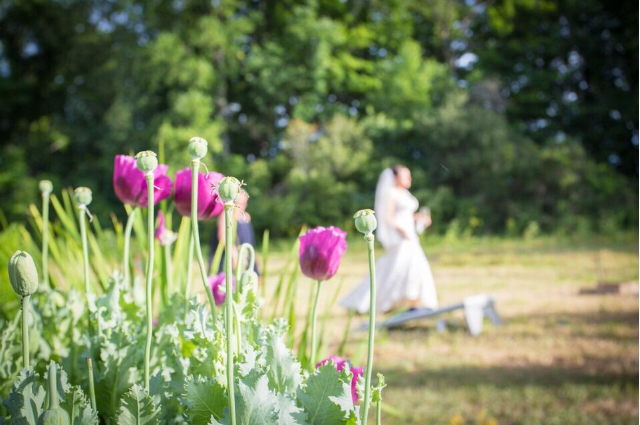
Flowers are equally helpful in the vegetable garden. Marigolds are famous for reducing nematode worm populations in the soil. I love Lemon Gem and Tangerine Gem marigolds that are named for their color and scent. The best crop of squash and pumpkins I ever had was the year I planted Sweet Allysum all around the bed. The bees loved it and stopped for a while on the squash blossoms in between getting drunk on the alyssum! So now I always plant drifts of Sweet Allysum for the bees. And the poppies, everywhere the poppies, they attract the bees and me! My favorite is “Lauren’s Grape.” I planted hundreds in honor of my beautiful daughter-in-law, Lauren, to bloom on her wedding day.

The herbs go everywhere. Herbs give beauty, scent, flavor, and protection. Herbs make good companion plants. A companion plant is one that improves the growth of its neighbor. Some herbs confuse hungry plant-eating insects who rely on scent to find their food. The strong aromas of herbs dominate the subtler scent of vegetables. Dill deters cabbage beetles and basil deters tomato hornworm, for example. While others use their scent to attract pollinators like lovage, a tall, celery scented perennial herb. Some herbs like yarrow and comfrey improve the health of the plants around them by improving the soil. Both use their long tap roots to bring nutrients deep in the soil up to the surface to be used by other shallower rooted plants. And comfrey is an excellent mulch adding nutrients to the soil as its leaves break down. Additionally, herbs help the gardener by releasing their perfume to soothe and invigorate the weary weeder.

This is the potager, a French word for vegetable soup, filled to the brim with the practical and the beautiful. So break the rules and mix it up a bit!

~Kat

Timing

Uncategorized

The first rule of the successful gardener is to work with nature not against it. Every plant has a range of optimum conditions for growth.  Learn what your plants like and they will reward you with abundance. For example, some plants are cold tolerant compared to others that are heat-lovers. This fact is helpful in spreading out the work in the garden. You need not wait until the last frost date to plant cold tolerant types. After these are up and running you can turn your attention to the heat-lovers.

As soon as the ground is dry enough to work in the Spring, (between March 30 and April 15th in my Zone 4b/5a garden) make smooth seed beds for carrots, beets, spinach, Swiss chard, kale, peas, and lettuce to name a few. They can hold steady through some cold days or nights. As soon as the conditions are right they will take off. By early May you could already be harvesting tender greens.

Note that cold tolerant plants conversely are usually sensitive to heat. Lettuce can be grown very early in spring but goes quickly to seed when the temps start to climb.* These cold tolerant plants can be grown again in the fall when in cools down. Just make sure you leave enough time for them to mature. To do this you need to know two things, the number of days to maturity (from the seed packet) and the date of first fall frost in your area (call your agriculture extension office if you don’t know). Cold tolerant vegetables can withstand frost and colder temps into the fall as well as the spring. Figure about one month past your fall frost date and count back the number of days to maturity for your vegetable. That is the last date you can plant and expect to have a fall harvest. In my area I plant carrots in early July for fall (and winter).

After the threat of frost is past in Spring, you can seed your heat loving plants. Now is the time to plant green beans, corn, zucchini, and cucumbers. When planting seeds always prepare a smooth bed. Summer’s heat and plenty of water will have you picking bumper crops of these veggies.

You may have noticed I have left out many common garden vegetables. These are the ones best started indoors or in a cold frame and transplanted later into the garden.

Transplants are required when there aren’t enough warm days in summer to guarantee a mature crop. Remember the “days to maturity” mentioned above? This implies number of days at optimal temperatures. Tomatoes need days over 80F and nights no colder than 65F. To get that, I need to start these indoors several weeks before the last frost date and plant the established plants after all danger of frost is past. Other plants that require this are peppers, winter squash, pumpkins, and eggplant. So, find out the first and last frost date in your area to see which plants can be grown directly from seed and which need to be transplanted.

*Staggered planting times

In addition to an early planting of lettuce above, guarantee fresh heads by planting a dozen or so seeds every few weeks in Spring and again in late summer into fall. This isn’t necessary for plants like kale and chard that have a wide heat tolerance. Cut leaves rather than the whole plant and come back again and again as the plant continually grows new leaves.

~Kat

On the Edge

Uncategorized

Spring in the garden is “new” in the best sense. New with no mistakes in it. If you are a reader of books on garden design you will have heard about “good bones.” This means that the structure of the garden is strong and pleasing. There is no better time to access this than early spring. A garden with good bones will give great satisfaction now before we start looking at it as a sea of tasks. All the snow has melted leaving neat rows, squares, and mounded beds in attractive patterns and textures in a palette of tans and browns. We are full of hope. This year…..

Practical doesn’t trump beautiful. A vegetable garden can be every bit as beautiful as a flower bed. Even accounting for differences is style and taste, what makes a vegetable garden beautiful is order. The design can be straight rows, raised beds, geometric patterns, or free-form. What establishes a sense of order is the clear demarcation of bed and path and garden and lawn. In a word – edging.

Many beginning gardeners think edging in wood, brick, or stone is the best way to accomplish this. While these are valid approaches and can be very attractive, it’s actually more difficult to maintain. It’s much easier to till freely and re-establish an edge with a grass path each year with touch ups as necessary. A flat spade or an edging tool is best for the job. First, clearly delineate your edge (see below) use one of these tools and use your foot to push down vertically to cut the roots of the grass then throw the soil onto the bed creating a mound. Pull free any weeds or plant roots. A garden that is well edged will look good even if you are behind in your weeding.

Ways to Mark an Edge:

Straight lines can easily be marked with a ball of mason’s string (mason’s string stretches less than standard string) between two stakes at either end of the bed. A circular bed can be made by fashioning an oversized compass. Simply tie the end of a string to stake in the middle of the bed. Extend the string to the desired radius and walk in a circle marking the perimeter as you go. Tie a bottle of garden lime to the end of the string and tap out bits as you go around the edge. Curves are easily made by using the garden hose as a “string.” This method makes gentle curves your lawnmower can cut around.

As well as edging within a garden an edge or frame around the garden is essential. The frame could be a traditional picket fence, a structural plant like the pyramid shaped Alberta spruce in each corner, or a surrounding brick path. A vegetable garden with good bones can hold its own in any overall landscape plan and doesn’t need to be hidden behind the garage. A garden that is beautiful is a magnet for the gardener and is more likely to be maintained.

~Kat

Start Small!

Uncategorized

Admire large gardens, plant small ones.

If you only have a small area in which to garden or a limited amount of time to devote to gardening consider making one of the following 10 x 10 ft specialty plots. Gardeners with limited time or space often make the mistake of trying to grow a little bit of everything but then become discouraged by their low productivity. Instead, try becoming self-sufficient in only one or a few vegetables at a time, adding varieties as space, time, and expertise allow. These 10 x 10 ft plots are practical because they are easy to work and maneuver around but any shape you choose can do.

NOTE – Yield is based on Jon Jeavons most conservative estimates in “How to Grow More Vegetables in Less Space than You Thought Possible.”

Eat Your Greens Garden

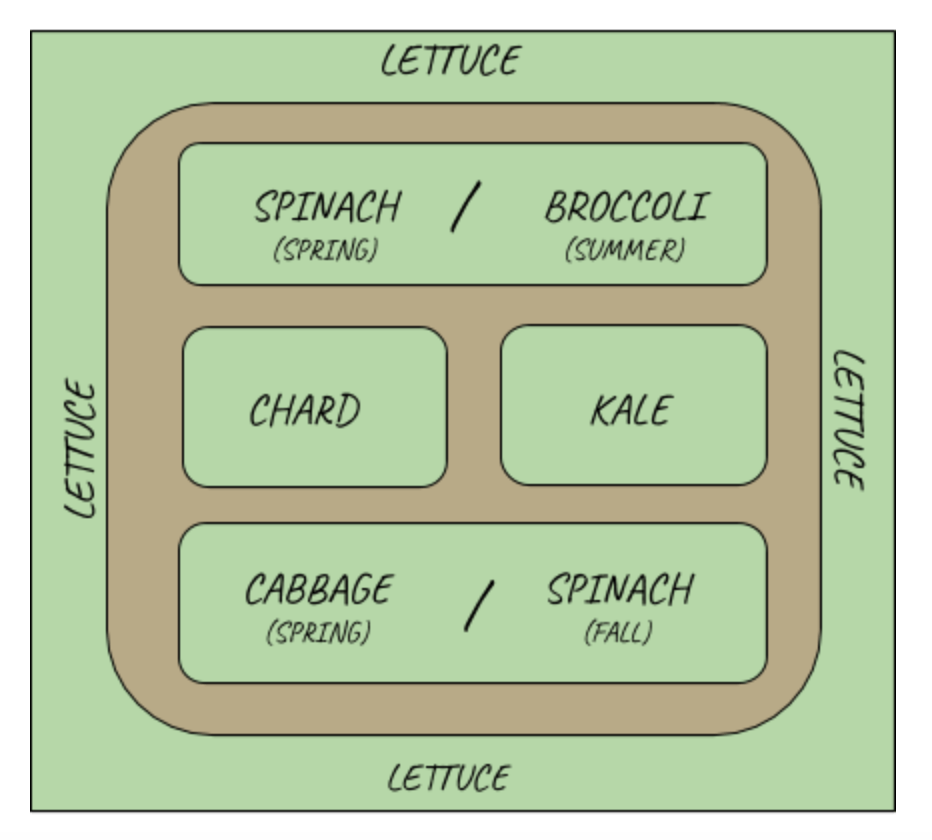
This garden is filled with greens for fresh harvesting like lettuce and kale as well as spinach and broccoli that you can freeze and eat all winter. Enjoy fresh lettuce over a longer season by staggering the planting. Plant a side every 2 weeks with 15 -20 seeds. Spinach can be planted twice, in spring and again in the fall after the cabbages are harvested. Chard and kale can be cut again and again all season. Broccoli also loves the cold weather so they can be planted after the spinach and picked well into the fall. Look for varieties that produce side shoots after the main head is picked for even greater productivity.

The Staples Garden

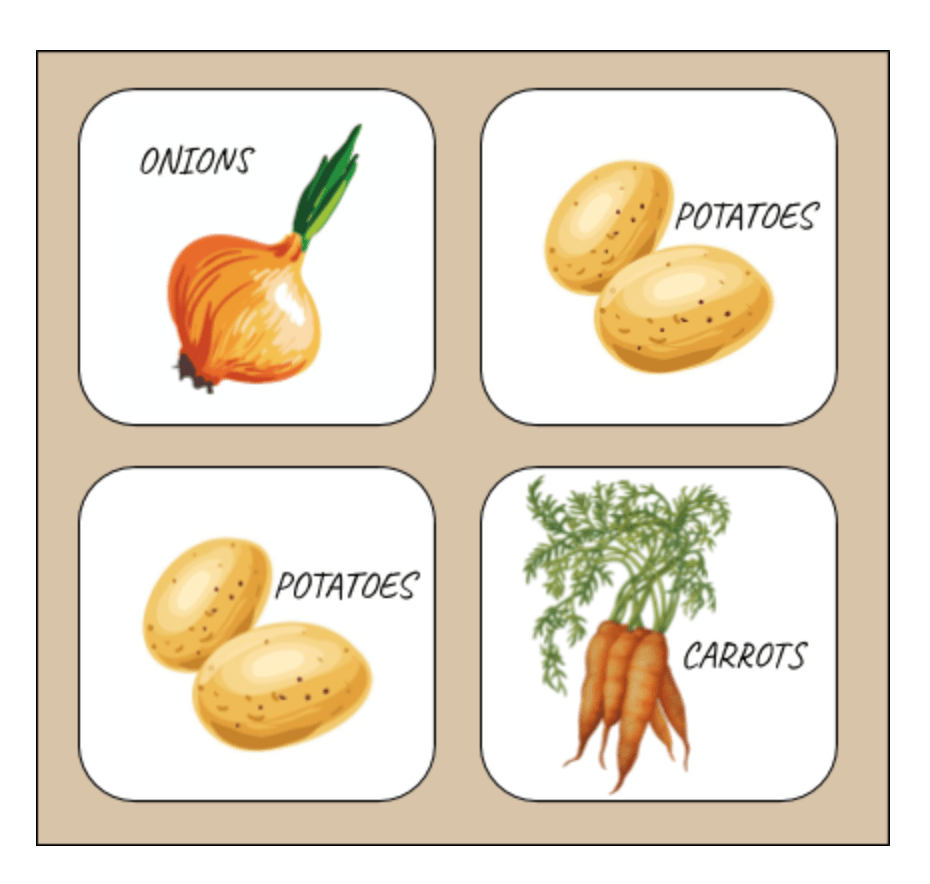
The Staple Garden is an easy plot that gets planted in early spring. Once planted, a thick mulch reduces the need to weed. At the end of the season you can expect to have 50 pounds of potatoes, 25 pounds of onions, and 25 pounds of carrots. Like money in the bank!

Plant Protein Garden

Vegan? Trying to reduce your meat consumption or just enjoy these protein packed veggies? Either way, this 100 square foot plot will yield 30 pounds of green beans, 5 pounds of peas and 10 pounds of soybeans (edamame). Plenty to eat now and more to freeze for later.

Hint: Use a tepee or trellis for the peas to increase yield.

Tomato Sauce Garden

Plant paste tomatoes in this garden for the richest sauce. Try Roma or Amish Paste. They are meatier than slicing types. You can expect to harvest 50 pounds of tomatoes from this garden. Season with onions, garlic, and basil to create a flavorful sauce to enjoy all winter.

The Pickle Garden

Get out your favorite pickle recipes! Whether you like pickles sweet or dilled, you will have plenty of produce to fill your shelves.

Hint: plant sweet green or hot peppers but not both or they will all be hot!

Herb Garden

Herbs are more than seasoning. They are beautiful and many offer health benefits of their own. For example, dill has long been used as a digestive aid. This is why it is often found in recipes like cole slaw to aid in digesting the cabbage. These herbs can be used fresh, dried, or preserved in oil or vinegar.

Think Outside The Box

When you decide you are ready to add more garden plots think about more than straight lines. A vegetable garden can be beautiful too!

~ Kat

Gardening for Food

Uncategorized

Food Production

Self-sufficiency and food production seem to go hand in hand. It can be a daunting task and potential recipe for failure for a beginning or even a seasoned gardener. There is a current boom in gardening in the United States. This is good, however, the glossy pictures in seed catalogs and gardening magazines often have little to do with food production. The first thing to realize is there are two types of food to grow in your garden, the kind you eat now and the kind you store for use after the gardening season is over. The average growing season in the U.S. is six months. Roughly speaking this means you need to grow half to eat now and half to save for later. Often what happens is that people end up with a bumper crop of produce in mid-summer that they end up giving away because it’s not the storing kind or they don’t know how to store it. Then come winter they are back in the grocery store.

Steps to successful food production:

VegetableEx: green beans
Times Eaten Per Week – Fall/Winter
(x 26)
2 (52)
Times Eaten Per Week – Spring/Summer
(x 26)
1 (26)
Total Times Eaten Per Year78
Number of Plants Needed36-78

1.       What do you eat?

This seems like a simplistic question until you recall all those people who plant radishes who wouldn’t dream of eating one. Fill out the following chart for yourself. Ideally this should be done by keeping a list in the kitchen and putting hatch marks next to the item every time you eat it. But let’s be realistic, you want to garden now. Just be aware this list will be fine-tuned over a number of years.

You will of course noticed that the conversion from how often you eat the vegetable and how many you should plant isn’t obvious. It depends on a number of things: how big your family is, how fertile your soil is, how good a gardener you are, and the productivity of the plant. But this simple example still shows that those glossy magazine pics mentioned above showing six green bean plants in a pretty little garden will, at most, give you 12 meals. So do the math.

2.       What should you plant?

After making a list of what you actually eat, decide which of these are the “eat now” kind and which the “store for later kind.”

Eat now Kind (Example: Lettuce, zucchini) The strategy for growing these kinds of vegetables is staggered planting. Unless you plan on eating 25 heads of lettuce in one week, don’t plant that many. Figure a head of lettuce per day and pad for losses due to poor germination, pests, and weather…..plant 10 lettuce seeds per week.

Store for later Kind (Example: Potatoes, onions) Ideally these type of vegetables are planted and later harvested all at the same time. Then they are stored or processed. It means the work to grow these is concentrated at the beginning and the end of their season. Staggering their harvest times can save you work and stress!

3.       Timing-Days to Maturity

Beginning gardeners are often under the impression that one goes out into the garden on Memorial Day with one’s basket of seeds, rakes a plot, and “puts the garden in.” Then merely keeps it watered and weeded until harvest. This is only one way and not the most productive way. First, often beginning gardeners think it’s too late; they’ve missed their window of opportunity if everything isn’t in by May 30th. As mentioned above many plants should have a staggered planting schedule. If you miss the first week or two there is still plenty of time. Many plants such as carrots and spinach can be planted in late summer for a fall harvest. I often plant cucumbers in the same plot after I have planted peas and put in a second batch of beans after I harvest the garlic. Still others can be planted in the fall and overwintered for early spring harvest. We are still pulling leeks planted last year. Read your seed catalogs and packets for information on “days to maturity” as well as best germination conditions. Experiment and take notes. You will quickly develop a list of YOUR favorites and the best times to plant them based on your success.

4.        Storage-Do you have the room?

Produce can be stored for the winter in freezer or root cellar with little or no processing. Planning ahead in the first case can mean the purchase of a separate freezer. Vegetables do need to be blanched (boiled for a short period of time) then rapidly cooled, drained and bagged. After this the only challenge is keeping track of what you have on hand and what you use. A list attached to the freezer will help you use what you have and also be a valuable tool for planning quantities for next year’s garden.

Root cellaring is the oldest method of food storage. This method consists of finding or creating a location with ideal conditions for long team storage. There are two areas with different conditions necessary for storing the widest range of produce. One cool and dry for squash and onions, the other cold and moist for carrots and cabbages. Processing by drying or canning needs only a cold dark cupboard for storage while these methods take more time, effort, and equipment up front, produce stored this way can keep for months or even years with no extra energy or attention. Lots more to come on food storage in future blog posts!

~ Kat

The Humble Onion

Uncategorized

I love onions. One of my tricks when I spent the day reading and forgot to start dinner was as soon as I heard my husband’s car in the driveway I would jump up; whack a cast iron pan on the stove, turn it on high, add olive oil and onion. By the time he stepped over the threshold he invariably said,” Something smells good!” I responded, “Just a few more minutes!” Onions save the day! Honestly, how anyone can resist their sweetness is beyond me.

Now I know onions aren’t the most expensive vegetable in the grocery store but since we eat so many of them I’d like the cleanest chemical –free ones we can get. No better way to do that than grow them yourself. You see the sets in all the hardware stores and garden centers in the spring. These are an easy alternative and one I took advantage of as a young gardener. Sets are simply onions seeds that are planted so close together literally to stunt their growth. They are then harvested, dried, and sold as sets. The next time they are planted their growth continues. But just like some plants that are root bound never fully recover, onions grown this way don’t always reach their full potential. Some just can’t break that dormancy and never grow at all. Another way to grow onions, which I have also tried; is by buying plants. These plants, usually grown in the south, are pulled up and sent through the mail. They are sent dried and as still alive are more consistently successful than sets, though are certainly stressed in the process. The lengths to which onions growers go to sell you these started plants sends the message that you can’t do it yourself. This is just not true. Growing onions from seed is easy and productive. I live in upstate NY and garden in Zone 4b/5a. I have successfully grown onions from seed for years. It does require staring seeds indoors or better yet in a cold frame. They don’t mind the chill. Packages recommend starting onion seeds in February. While this would be ideal, I have had success seeding them directly in the garden as late as May 1st, Admittedly they aren’t as big but I seek only to show you planting from seed isn’t hard or mysterious.

I follow Elliot Coleman’s suggestion of planting onions in groups of 5-6 and spacing these groups a foot apart from each other. This makes weeding between the clumps so much easier. The onions grow outward with no reduction in overall size at maturity.

When you harvest leeks and onions leave a few behind. The bulb will flower the second year. The resulting flower will rival any Allium bulb from the Dutch bulb catalogs. Tall spikes, some varieties grow to 5 feet, are topped with stunning white or steel blue spheres. These flowers have the added benefit of attracting dozens of beneficial insects. Seeds will develop from the flowers and will self-sow if left to their own devices. You can cut the flower before they drop and dry it upside down in an airy location out of direct sunlight. If picked before the seeds develop the resulting dried flower can be striking in dried arrangements. Alternately, you can collect the seed to plant next year. To do this, timing is key; you want the seeds to be as mature as possible but not yet dropping. Again, dry upside down in the same conditions as above but secure a lunch size brown paper bag with a rubber band around the flower to catch the seeds as they drop. It may not breed true if other varieties were around to cross-pollinate. The results can be a pleasant surprise and are worth a corner of the garden if you have the room. Seed saving is also an economical plan if funds are limited. Many fine old varieties would have been lost if not for some frugal gardeners.

~ Kat